5 min read

Digital systems hide their environmental footprint behind interfaces. Designers are trained to optimize for users and business, but there's no practical toolkit to bring planetary impact into the process without derailing either.

Solo designer and researcher. Concept development, tool design, visual identity, workshop planning, facilitation, and use case testing.
End to end.

11 original design tools organized into a 5-phase lean methodology. Tested in a hybrid workshop with real participants. Later used professionally in a workshop I facilitated at Taikonauten.

Most sustainability frameworks for digital products stay theoretical - principles to read, not tools to use. I wanted to build something a design team could actually pick up and run with: a structured methodology that walks you from problem definition to tested prototype, with environmental impact factored into every step. The toolkit adapts the Lean methodology and Jake Knapp's Design Sprint structure for a planet-centric context. Each tool was designed to work both digitally (Miro, Figma) and on paper for maximum flexibility.
There were sustainability principles, but no ready-made design tools. Every tool had to be built from scratch: researched, structured, written, designed and tested for clarity with people who'd never seen them before.

The tools needed to work for designers who'd never thought about sustainability and for teams already deep in it. That meant keeping things simple enough to pick up in minutes, without dumbing down the thinking.

A 5-day workshop doesn't leave room for tools that need a manual. Every tool had to be self-explanatory enough to pick up mid-session, but structured enough to produce meaningful output, not just Post-it brainstorming.
The methodology was built in four iterative phases: (01) research, (02) ideation, (03) concept development and (04) testing.
Here's what shaped the decisions.
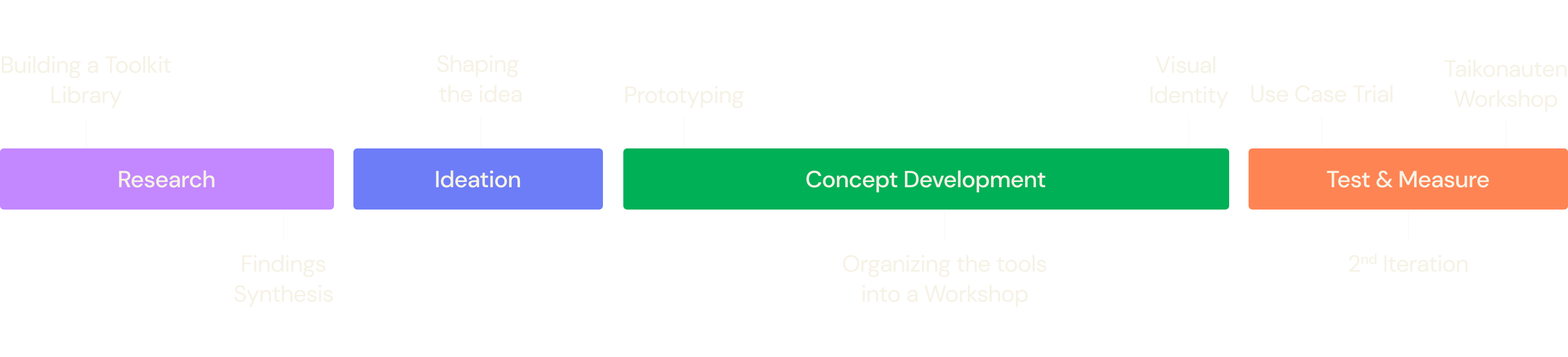
The 5-phase methodology builds on Lean and Jake Knapp's Design Sprint, which are frameworks teams already trust. The innovation isn't the structure. It's what happens inside each phase when you add the environmental layer.
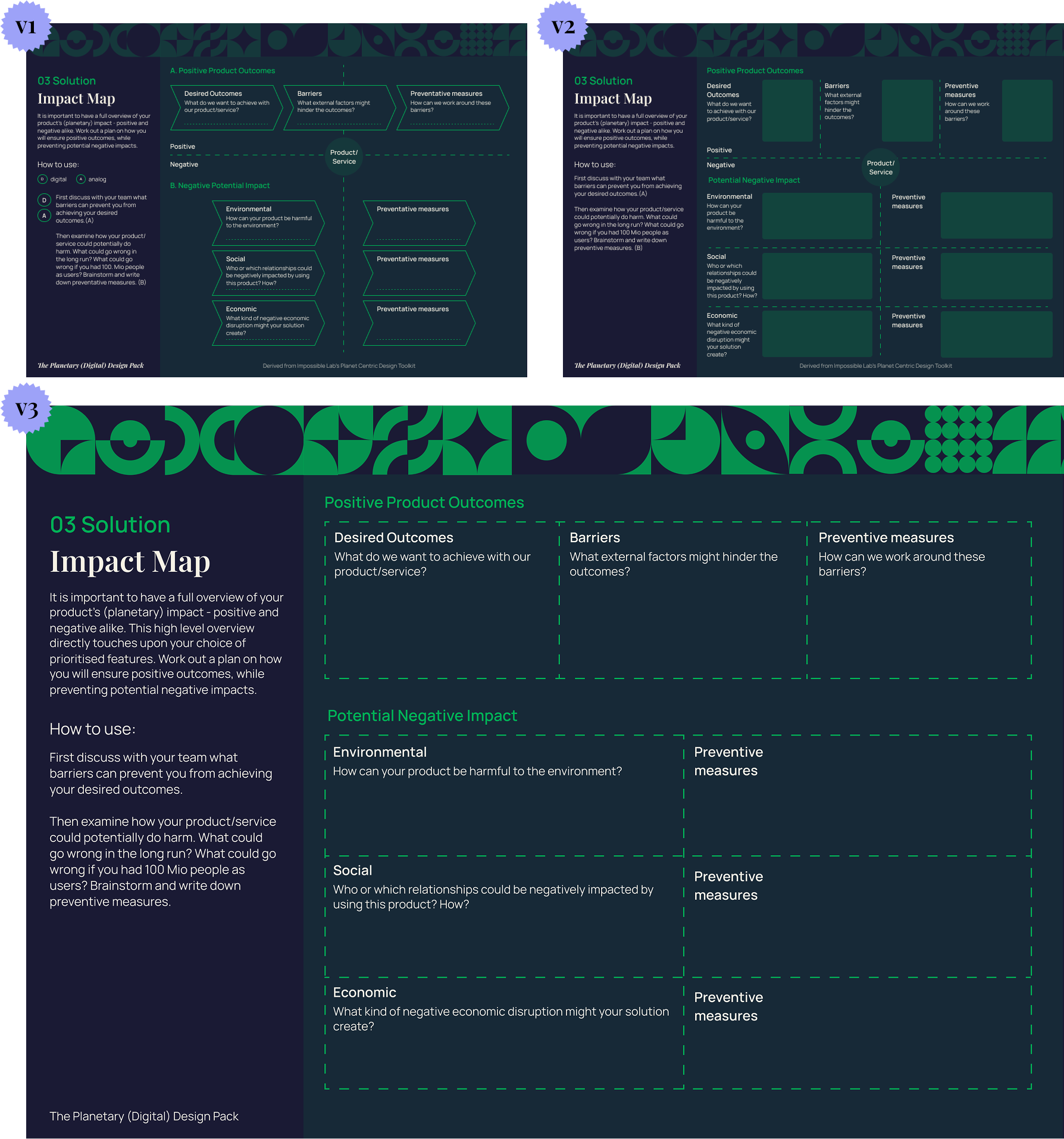
Early versions of several tools tried to do too much. The biggest iteration gains came from cutting, not adding. The Impact Map for example went through three major versions before it was clear enough for someone to use without explanation.
Every tool exists as a digital canvas (Miro/Figma) and a printable card. The visual design uses only geometric shapes and simple strokes — specifically so they can be sketched on a whiteboard in-person without losing meaning.
Individual tools are easy to validate. The real question was whether all 11 of them, sequenced across 5 days, produce a coherent outcome. That required a full workshop test, not just a usability session.

The toolkit follows a lean structure. Each phase has a clear goal and 2-3 tools to get there. The whole thing runs as a 5-day workshop, but the tools also work independently. A team can grab the Impact Map or the Green UX Checklist without running the full sprint.

The Impact Map went through three.
V1 had too many fields and confused testers. V2 simplified the structure but broke the connection between positive and negative impacts. V3 found the balance — clear enough for non-designers, deep enough to surface real trade-offs.
Every canvas works in two contexts: digital for remote teams, print for in-person workshops. The visual language was kept deliberately simple. It had to be reproducible with a few strokes.


The workshop structure is modeled on Jake Knapp's Design Sprint, reorganized into five phases that mirror the toolkit: Definition, Exploration, Solution, Prototype, and Test & Measure. Each day has a clear goal, a set of tools to use and a defined output. The workshop is the methodology's delivery format - it gives the tools a sequence and a pace.
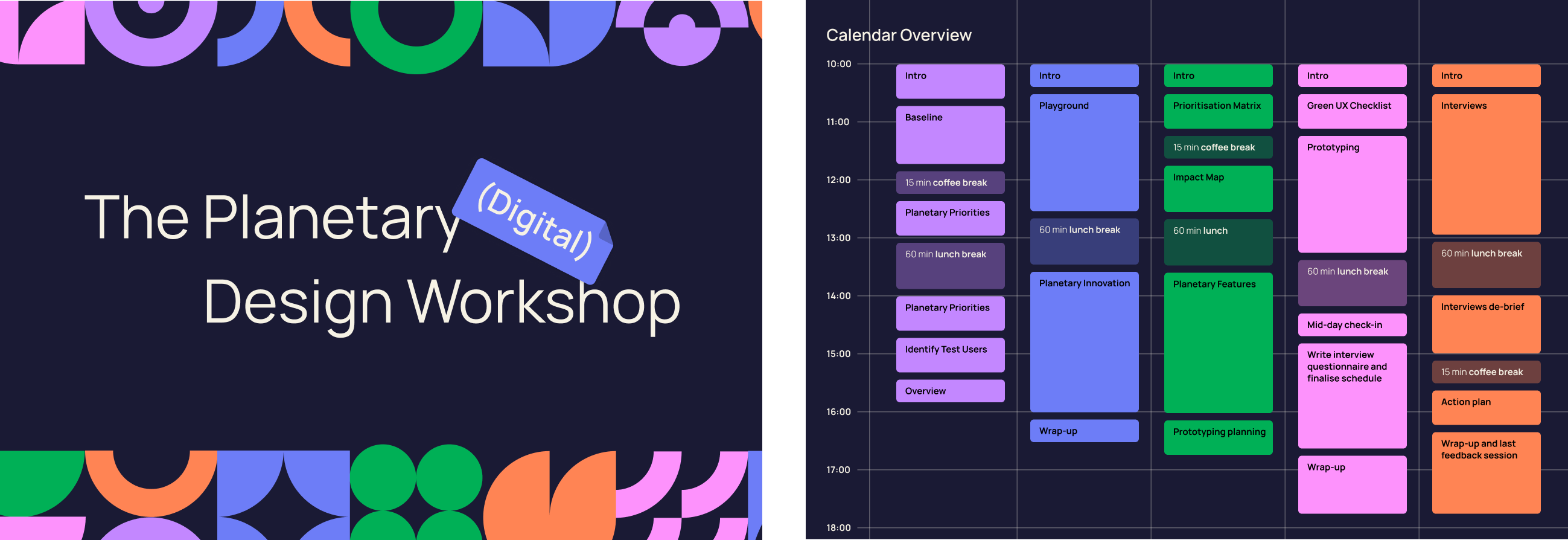
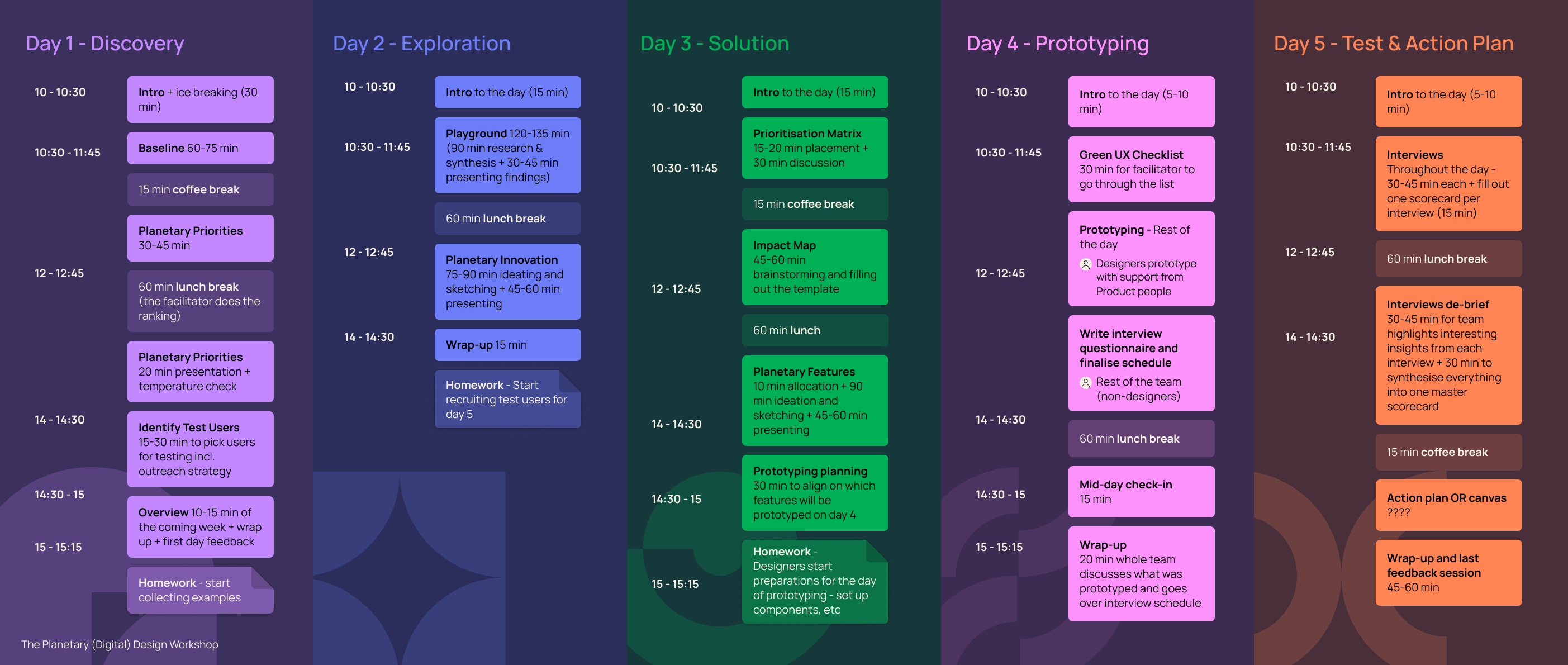
I ran a condensed version of the workshop covering Definition, Exploration, and Solution. The use case, expanding a job search app with a sustainable employment feature, was deliberately unfamiliar.
The point wasn't to ship something. It was to stress-test whether the tools could guide planet-centric thinking without hand-holding.

Are the tools easy to understand without lengthy explanation? Do they produce the kind of outputs they're designed for? Can they take a team from problem definition to a testable prototype?
On day 4 I built a prototype from the workshop output and ran 2x 30-minute feedback interviews to answer those questions.
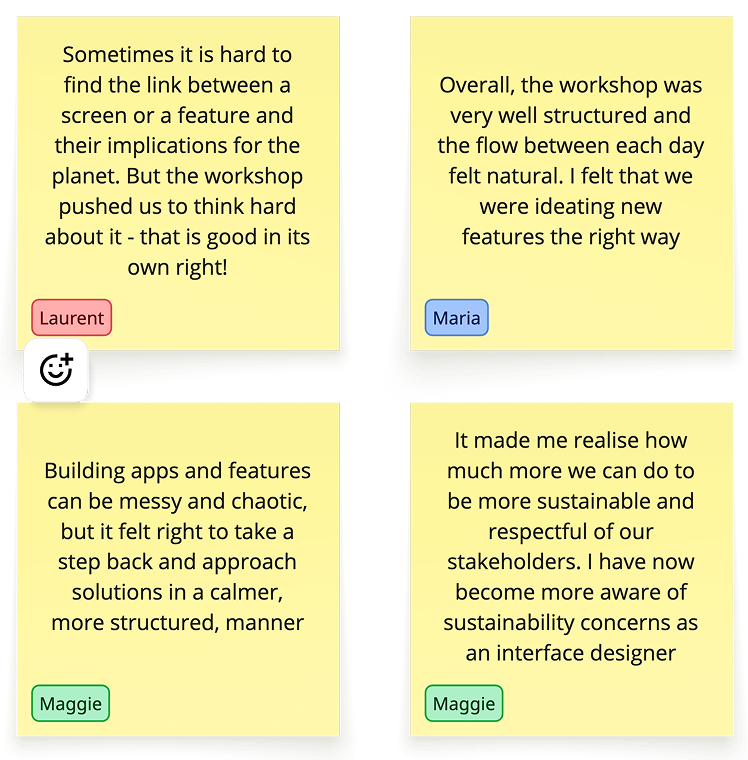
The flow between days felt natural - participants knew where they were and what came next. The hardest part was connecting a specific screen or feature to its environmental footprint. That's genuinely difficult and the fact that the workshop surfaced it meant the tools were doing their job, pushing teams to think about something they'd normally skip entirely.
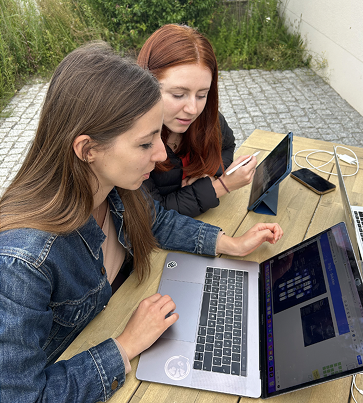

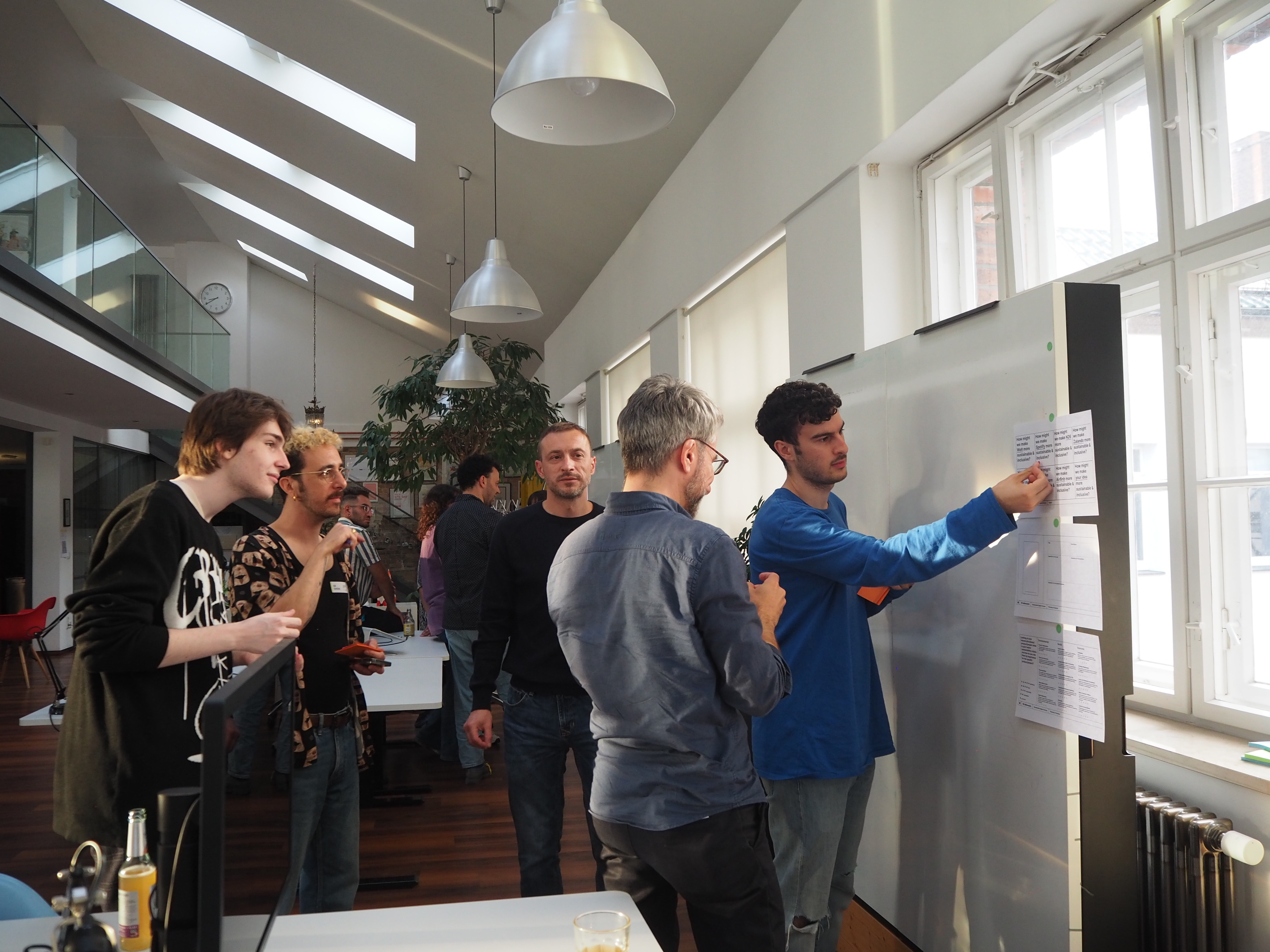
After refining the toolkit based on workshop feedback, I facilitated a Planet-Friendly Digital Design session as part of Taikonauten's "Innovate Together" series - an external knowledge-sharing programme at the agency.
The tools moved from a controlled test environment to a room of professional designers working on real client problems.